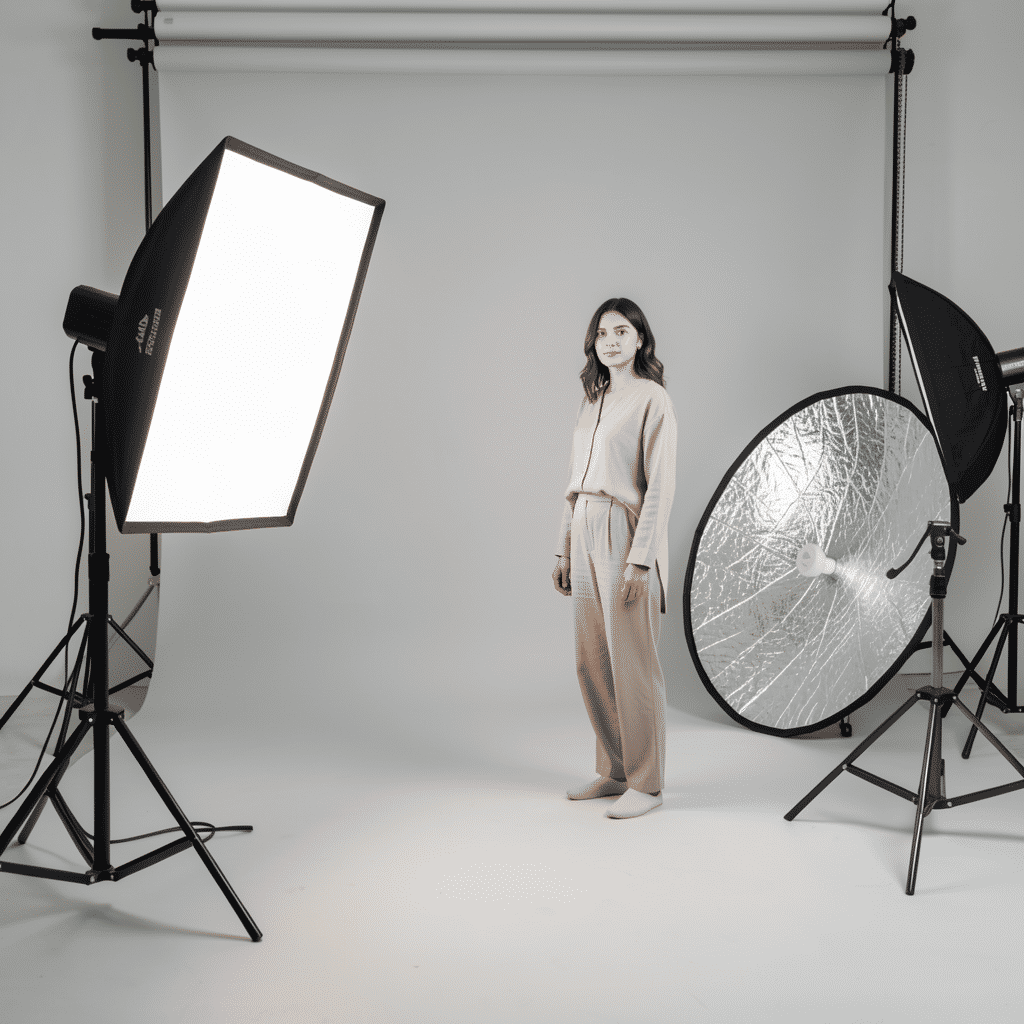
Understanding lighting is one of the most crucial skills you can develop as an aspiring photographer. Mastering how light interacts with your subjects will greatly enhance the quality of your photos and enable you to create the mood and effect you envision. Whether you’re using natural light or creating your setup indoors, here are some essential tips to help you make the most of your lighting.
Natural Lighting:
-
Golden Hour Magic: The golden hours, shortly after sunrise and before sunset, provide soft and warm light that is ideal for photography. This time is excellent for capturing landscapes, portraits, and outdoor scenes as the light is diffused and gentle, eliminating harsh shadows.
-
Cloudy Day Advantage: Overcast skies may seem gloomy, but they act as a natural diffuser, providing even lighting that’s perfect for portraits and close-ups. This type of light minimizes shadows and highlights, giving you more balanced shots.
-
Direction of Light: Paying attention to the direction of natural light can drastically alter your images. Side lighting can create drama and texture, while backlighting can offer beautiful silhouettes and a dreamy look.
Artificial Lighting:
-
Understanding Soft vs. Hard Light: Soft light is achieved by diffusing harsh light sources. It creates gradual transitions from light to shadow, which is flattering for portraits. Hard light, by contrast, casts sharp and defined shadows and can be used to create intense, high-contrast images.
-
Using Reflectors: A reflector is a simple tool that directs light back onto your subject, filling in shadows and adding depth. You can use various surfaces as reflectors, like white boards or even a light-colored wall, to bounce light and soften shadows effectively.
-
Experimenting with Angles: Changing the angle of your artificial lights can significantly impact your image. Low angles can exaggerate features and cast long shadows, which can be dramatic and stylized, while overhead lighting can create a more natural appearance.
-
Continuous vs. Flash Lighting: Continuous lighting allows you to see how light affects your subject in real-time, which can be advantageous for beginners. Flash, or strobe lighting, is more adaptable to different environments but requires a good understanding of settings like flash duration and intensity.
Balancing Light Sources:
Learning to balance various light sources, like mixing natural and artificial lighting, is a valuable skill. Use natural light as your primary source and artificial lighting to enhance or fill in shadows. This approach can create dynamic and well-exposed images.
Final Thoughts:
Experimentation and practice are key to becoming skilled at using light. Observe how light falls on different subjects throughout the day, play with different light sources, and continuously challenge yourself to try new techniques. With time, you'll develop an intuitive understanding of lighting and how best to harness it to create stunning photographs that tell your story.