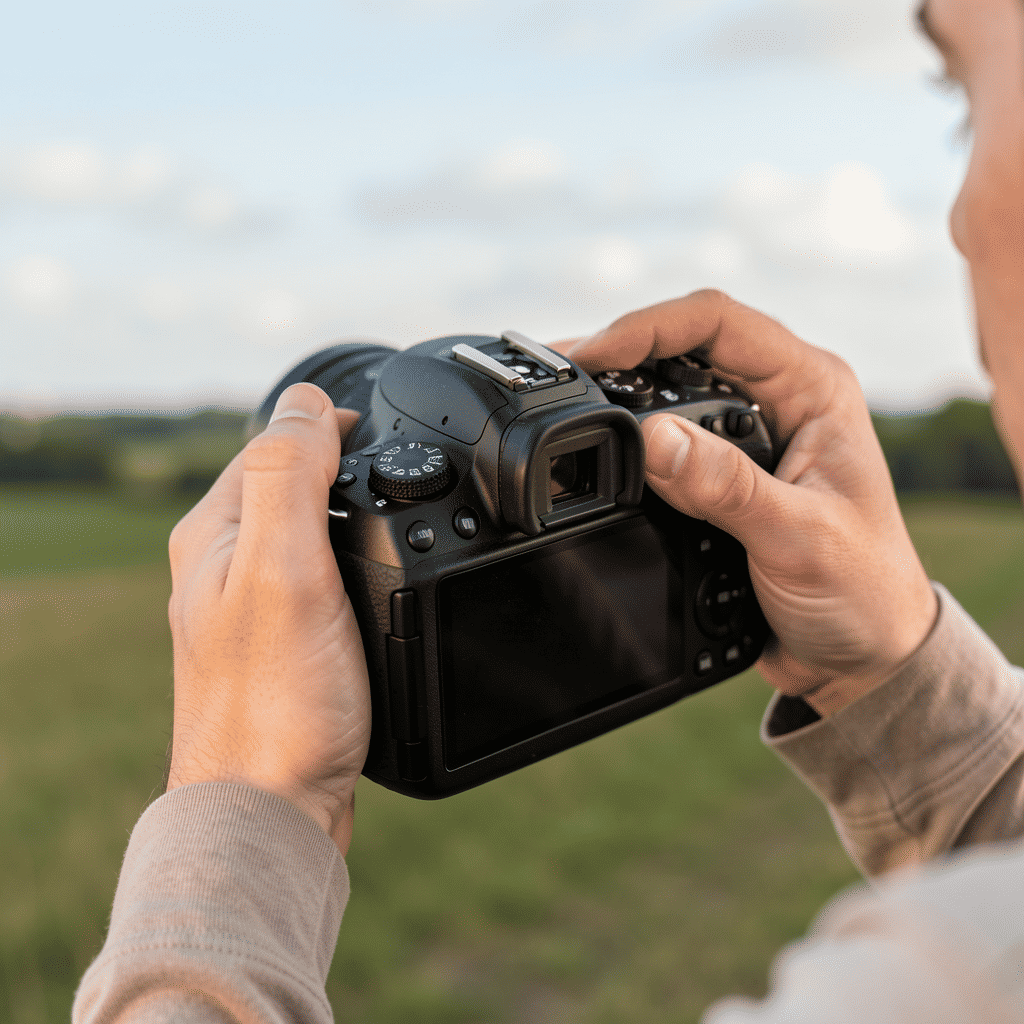
Understanding how to effectively use your camera settings can transform your photography from mere snapshots to beautifully captured memories. It's crucial for beginners to become familiar with the basic settings and principles that can significantly improve the quality of their photos. Here's a guide to getting started.
1. Exposure Triangle
The foundation of photography settings lies in understanding the exposure triangle, which consists of aperture, shutter speed, and ISO. Balancing these three elements is key to achieving the desired exposure.
-
Aperture: This refers to the opening in a lens through which light enters the camera. A smaller f-number (e.g., f/1.8) means a wider aperture while a larger f-number (e.g., f/16) indicates a narrower aperture. A wider aperture creates a shallow depth of field, which is ideal for portrait photography.
-
Shutter Speed: This is how long the camera's shutter is open to let light hit the sensor. A faster speed (e.g., 1/1000) freezes motion, while a slower speed (e.g., 1/30) can create a motion blur effect, making it great for capturing the movement of water or light trails.
-
ISO: This setting adjusts the camera's sensitivity to light. A lower ISO (e.g., 100) is great for bright conditions to avoid graininess, whereas a higher ISO (e.g., 3200) can brighten images in low light but may introduce noise.
2. White Balance
White balance ensures that the colors in your photos are accurate and true to life. Different lighting situations, such as daylight or fluorescent light, can have varying temperatures. Most cameras offer presets such as cloudy, sunny, or tungsten to help adjust for these conditions. Understanding and adjusting white balance can significantly affect the color tone of your images.
3. Focus Modes
For beginners, understanding autofocus modes can simplify the process. Single-point autofocus allows selecting a specific point within the frame, while continuous autofocus is ideal for moving subjects. Many cameras also offer face detection to prioritize focusing on faces in a scene.
4. Metering Modes
Cameras come equipped with different metering modes to measure the brightness of a scene and assist in setting the correct exposure. Evaluative/matrix metering considers the entire scene, center-weighted metering focuses on the center of the image, and spot metering measures a specific point.
5. Shooting Modes
Most beginner cameras come with a variety of shooting modes, ranging from auto to fully manual. While auto mode is handy, learning semi-automatic modes like aperture priority or shutter priority provides more creative control while still offering some automated assistance.
6. Composition Techniques
While not a camera setting, composition is crucial. Techniques like the rule of thirds, leading lines, and framing can significantly enhance your images. Composing your shot thoughtfully helps emphasize your subject and tells a more compelling story.
7. Practice and Experimentation
Finally, the best way to master your camera settings is through practice. Experiment with different settings, and take note of how changes affect your images. Exploring various environments and subjects not only improves your technical skills but also fosters creativity.
By understanding and applying these fundamental aspects of camera settings, beginners can unlock new creative potential and develop a deeper appreciation for the art of photography. Embrace the learning process and enjoy the journey of capturing the world through your lens.